Toll Free: (800) 888-8987 | Phone: (440) 835-3540 | office@ramsensors.com


What Is A Thermocouple Wire?
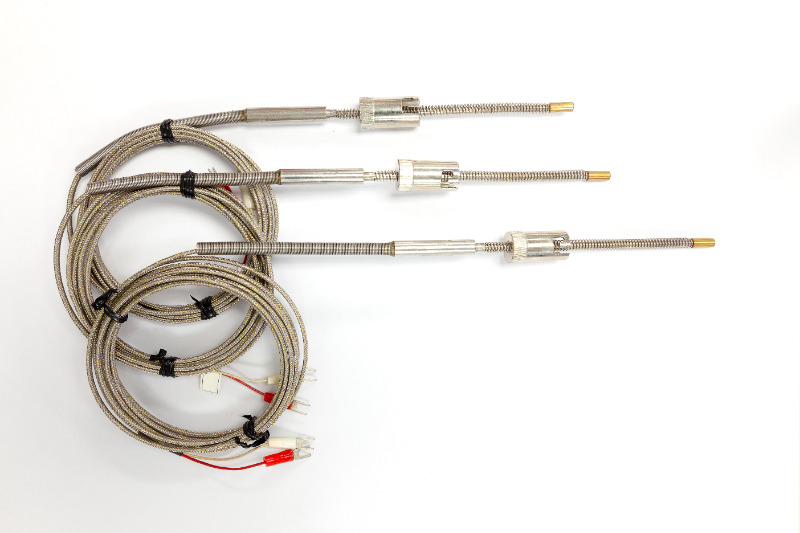
Thermocouple wires are widely used across industries today. Any time a precise high-temperature or specialized low-temperature measurement is required, thermocouple wires are vital. Here we will dive into some of the basics to know about thermocouple wires and how to choose the right one for your use case.
Thermocouple Wires Defined
From the aerospace, automotive, and medical to manufacturing and oil and gas industries, thermocouple wires are everywhere. They’re critical for monitoring processes in commercial and industrial equipment, in laboratories and household appliances alike.
Thermocouple wires measure temperature thanks to two different metals that are joined together at one end. Heat causes these metals to react, and the tip of a thermocouple wire creates a tiny electrical signal that grows stronger as the temperature increases. The thermocouple wire is connected to a device that can read the signal and translate it into a temperature reading. This enables operators to monitor production processes regularly, and oftentimes, remotely as well.
Types Of Thermocouple Wires and Their Applications
Thermocouple wires are selected based on a range of potential temperatures, from extremely high-temperature applications to cryogenic uses. The letter codes that are assigned various colors generally point to the type of metal used in the wiring and the range of temperature that the thermocouple can most accurately sense or withstand. Types J, K, N, E, and T thermocouple wires are nickel-based (base metal) while R, S, and B are platinum-based (noble metal).
Below you’ll find the most common types of thermocouples available and some key use cases for each one.
Type K
This is the most common thermocouple available. Type K thermocouples are reliable, affordable, and function well over a wide temperature range, making them an all-around good choice for a wide range of applications, some of which include:
- Ovens and furnaces
- Engines and exhaust systems
- Kilns
- General industrial temperature monitoring
Type J
Type J thermocouples are accurate at lower temperatures than other models. That said, they don’t put up well with excessive moisture or prolonged very high temperatures. This type of thermocouple is suited to use in the following applications:
- Older industrial equipment
- Plastics manufacturing
- General-purpose use in dry environments
Type T
Type T thermocouples offer a more precise reading at cold temperatures. They are very stable and accurate, even well below freezing. Type T thermocouples can be used for a wide range of applications, including:
- Refrigeration and freezers
- Food storage and transport
- Medical and lab environments
- Cryogenic settings
Type E
Type E thermocouple wires produce a stronger signal than most types, so it’s good for accurate detection of even very small temperature changes. Type E thermocouple wires are commonly used in the following ways:
- Labs and research
- Low-temperature measurements
- Situations requiring high sensitivity
Type N
Type N thermocouples are similar to Type K models but are more resistant to aging and high-heat damage and so last longer. They are best used in the following applications and scenarios:
- High-temperature industrial environments
- Long-term monitoring
- Power plants and heavy manufacturing
Type R & Type S
Type R and Type S thermocouple wires are made using platinum. This premium metal allows these thermocouples to be very accurate, but also makes them more expensive. These applications benefit from their special construction:
- Glass manufacturing
- Steel production
- High-temperature laboratories
- Calibration standards
Type B
Type B thermocouple wires are designed for extremely high temperatures, and conversely, they are not well-suited to being used at low temperatures. Their speciality makes Type B thermocouples ideal for use in:
- Steel furnaces
- Very high-temperature industrial processes
Thermocouple Installation and Use Basics
Thermocouple wires of all types need to be in good contact with whatever it is that is being measured. Stability is key to ensure a proper reading–loose or poorly placed probes are known to give unreliable readings. Thermocouple wires also come in various thicknesses. While thinner probes react faster, they are generally more fragile and may not stand up to extreme conditions.
It is important to remember that while thermocouple wires are known to be accurate, they do have a margin of error. While they are often used in lab equipment, not every type of thermocouple wire will give lab-perfect readings. A thermocouple’s typical accuracy is around ±1–2°C, which is generally more than enough accuracy for most industrial and commercial uses.
When it comes to choosing the correct thermocouple wire for your use case, you can ask a few simple questions to narrow down your options:
- What temperature range am I measuring?
- Is the environment hot, wet, corrosive or prone to vibration?
- How accurate does the measurement need to be?
- How long does the thermocouple need to last?
Once you have a clear answer to each of these questions, you’re well on your way to choosing the right thermocouple for your needs. If you’re unsure where to start, Type K is a generally safe default option. And if you are truly unsure, the friendly experts at Ram Sensors, Inc. are always ready to help–contact us anytime.
When To Use A Thermocouple Probe
It
can
be
easy
to
get
caught
up
in
the
terminology,
but
a
thermocouple
probe
differs
from
a
thermocouple
wire
in
a
few
key
ways.
While
a
thermocouple
wire
is
the
unit
that
creates
the
temperature-sensing
signal
itself,
it
can
be
fragile,
requires
proper
termination,
and
is
generally
less
protected
from
heat,
moisture,
or
damage.
A
thermocouple
probe
makes
up
for
those
weak
points,
providing
a
durable
housing
(metal,
ceramic,
etc.)
to
contain
the
wire
within.
Together,
these
parts
form
a
finished,
ready-to-use
sensor.
Thermocouple
probes
protect
the
wire
junction,
make
installation
easy
and
repeatable,
and
help
to
improve
overall
durability
and
safety,
even
in
harsh
environments.
They
are
commonly
used
in
the
following
applications:
- Industrial equipment
- Ovens, furnaces, and boilers
- Process control and monitoring
RAM Sensors Knows Thermocouples
Whatever your application or thermocouple sensor needs, you can find what you’re looking for at RAM Sensors. As temperature sensor manufacturers we are dedicated to know what will work best in any given application. Contact us today to inquire about a specific model of thermocouple or to discuss your upcoming project.